

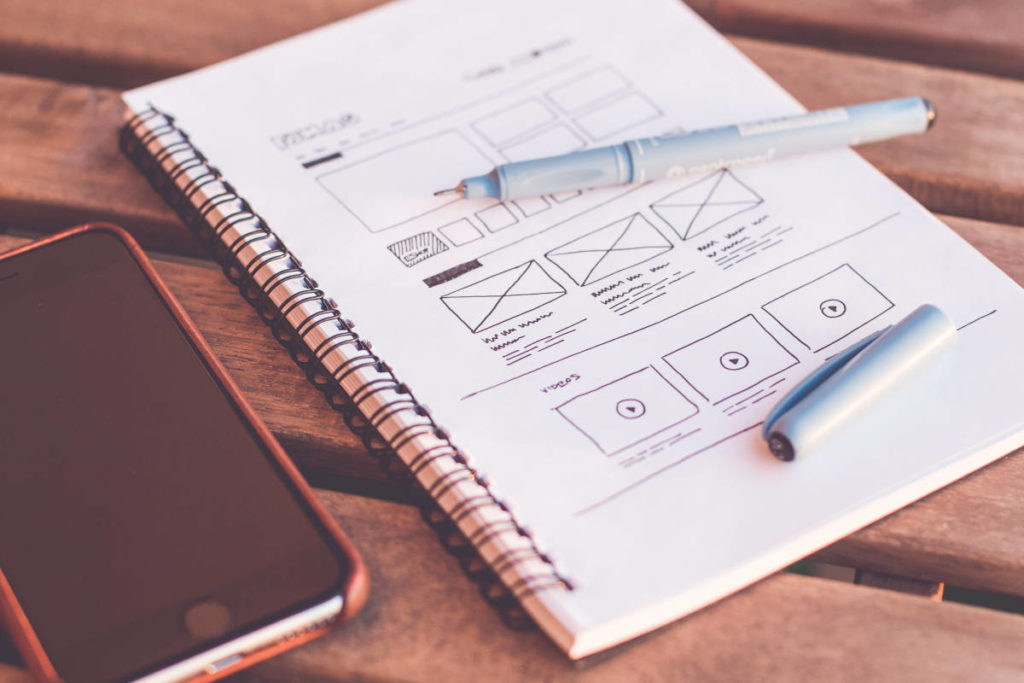
The business opportunities offered by the digital space today are the present and future of most businesses in our country. We can say that websites and corporate social media are a brand's main online calling cards. They are the first thing an interested user will visit. Therefore, professional websites fulfill a series of key roles:
- Project and convey the corporate image to the outside world
- Present the added value offered to the user
- Guide users and persuade them to get in touch or buy
- Provide contact information
But not all professional websites are well designed to fulfill their important role.
That's why in this post we'll take an in-depth look at the essential pillars that must underpin the websites of any business for them to be truly effective:
- Design
- Usability
- Contents
- Transactional CTAs
- Performance
- Optimization on-page focused on SEO (interlinking)
The value of a well-designed professional website
Whether we're talking about a corporate website, an online store or a service-selling website (a mix of the above), it will never succeed if it is not well planned and, consequently, well designed.
But how do you know which design and layout is the right one? There are no general guidelines that work for each and every web project out there, but there are certain web design guidelines that most professional sectors share. And these are based on:
- Business goals
- Competitors (especially those that rank better organically than we do)
- Analysis of the SERPs for the main terms in the business vertical
- Latest positive trends in the web industry
As you would expect, professional websites must arrange their content according to what they want to achieve, that is, their business goals. These may be sales, leads, spreading information, video views, file downloads, content reading and interaction, etc. Whatever the goal, it will take priority when designing the page.
By web design we mean the arrangement of content based, as we have been saying, on business goals, competitors or the SERPs, but also the site's aesthetic component. This must be in line with the company's branding and corporate image.
Web Usability
All of the above comes together in a concept that is one of the keys to any professional website: web usability. The experience users have on our website will determine the viability of our digital business model. And it is the web design department's job to provide the best on-site experience possible through a coherent, logical and intuitive web architecture.
The web usability is understood as how easily internet users can navigate a website, as well as how well they understand its content and structure to achieve the goal that brought them there.
What elements help create a “usable” web environment?
- Clear, understandable and valuable content for the user
- Logical and visible internal navigation
- Consistent placement of the main CTA ( call to action) elements in the content
- Accessibility: the website can be viewed on all devices and delivers its content to everyone without problems, even people with a sensory impairment
- Creativity serving business goals
In the digital ecosystem, content is still king, so without original, useful information that offers tangible solutions to users, all the other factors will be in vain on any professional website. However, we should never forget the share of users who may find it hard to understand our web architecture despite our efforts to offer intuitive, meaningful web usability. That's why the correct use of informational CTAs, but above all those with a transactional purpose, will unerringly guide everyone who visits the website toward the key actions of our marketing strategy, that is, those we have defined as business conversions.
The importance of the technical side of professional websites
You'll probably hear more and more about the term performance when it comes to defining the performance of professional websites. It is especially relevant in organic SEO strategies. Web developers play a decisive role here.

At Webbing Online we know exactly what this is about, since one of our great strengths as a digital marketing agency is precisely the know-how in systems and our infrastructure as a hosting provider.
Any self-respecting website, especially corporate and professional ones, must respond quickly to the web requests it receives, to avoid a significant drop in traffic. It is therefore necessary to pay attention to the hosting plan you have, how it is optimized and configured, and the website's URL profile (the more URLs with good content, the better, but those that add no value should be removed). And of course, “clean” the website of any unnecessary code that slows down loading.
Time for the SEO on-page of our website
Any professional website, whether it belongs to a freelancer, a company or a business, has to be “presentable” when search engine robots visit. What do we mean by this? That the internal tagging of a website must be properly optimized so that these robots understand the content and can index and rank us for the topics and terms that matter to us as a business.
To do this, you first need to have carried out a thorough keyword research of our sector/products/services. Find out how users search on Google and other search engines for what we do as a company, study terms by search volume and wording, and assign the ones we want to each URL or product/service so they can be included in the corresponding HTML tags.
The on-page information of a website isn't all about keywords. Most tags will prioritize their use, but others will provide other kinds of information that are also relevant to its organic performance.
All the professional websites we come across should have the following tags properly optimized:
- Title
- H1-H6 headings
- Meta description
- ALT attribute
- Meta Robots
- Dofollow and Nofollow attributes
- Geolocation parameters in images
As an agency specialized in SEO services in both Madrid and Barcelona, we master the on-page optimization of professional websites because we know how important it is within any digital strategy.
Interlinking
Another very important aspect for both search engine robots and the web usability of any professional website. The act of linking correctly and meaningfully between our own web content will tell Google and, more importantly, the users who visit us how they should navigate our corporate website or e-commerce.
Not exactly how they should navigate, since each user will come to the site with their own purpose, but it will reflect the logical relational coherence between the website's content. For example, using Webbing Online as a reference, and this post about professional websites while we're at it 😊, you'll have noticed that when we talked about SEO, we linked to our landing dedicated to SEO services. The same goes for when we mentioned web design or social media. This way, we mark out a logical path for users who want to learn more about these concepts, taking them to their specific pages through a link.
This way, Google and the other search engines identify associations between the concepts in our content, and therefore between the different parts of the website, helping them understand us better.
Methodology for designing professional websites
The agencies specialized in web design have similar but differing methodologies when developing professional website projects. At Webbing Online we follow a process in which we work hand in hand with the client at every stage.
Phase 1
- Explanation of the project and its goals
- Study of the sector and competitors (web designs, features, technical implementations)
- Setting delivery dates for each phase of the project
- Scheduling meetings to approve progress
Phase 2
- Internal team meeting to set the technical, design and web usability guidelines best suited to the project
- Defining and requesting from the client the resources needed on their side for the web design
- Start of work in a staging environment (web architecture, integrations, content, etc.)
- Weekly or biweekly meetings with the client to oversee the project (sending mockups of the design in advance)
Phase 3
- Project approval
- Agreement with the client on the migration procedure
- Web project delivery
Conclusions
The professional websites, in order to be effective over time for freelancers or companies, must follow various technical parameters and receive ongoing maintenance to ensure maximum performance. This requires the occasional services of programming, web design and digital marketing professionals. If you're thinking about building yours, we explain how much a professional website costs and what the price depends on.
Nowadays it is very hard to make the most of any project's commercial potential without a professional website, given the unstoppable growth of the digital world in every area of our daily lives. But a poorly built website will never meet its goals, and it can even be counterproductive in certain respects.
In Webbing Online we are entirely at your disposal for web consulting and any other questions you may have about what professional websites should be like.